
WhatsApp Integration Guide
Connect WhatsApp Business to ChatFlow with Quick Setup, so your chatbot answers WhatsApp messages automatically.
Before you begin
This guide connects your WhatsApp Business account to ChatFlow so your chatbot answers WhatsApp messages 24/7 using the same knowledge base as your web chat. With Quick Setup you log in with Facebook, pick your account and phone number, and ChatFlow configures the rest.
Before you begin
WhatsApp is available on the Growth and Enterprise plans. You will need a WhatsApp Business account with a phone number (set up in Meta Business Suite) and the Facebook login that manages it.
Prefer to watch? This short walkthrough shows Quick Setup: connect WhatsApp from your Integrations tab, log in with Facebook, pick your account and phone number, and test it.
Connect with Quick Setup (recommended)
Open the Integrations tab
In ChatFlow, open your chatbot and go to the Integrations tab. Find WhatsApp and select Connect WhatsApp.
Choose Quick Setup
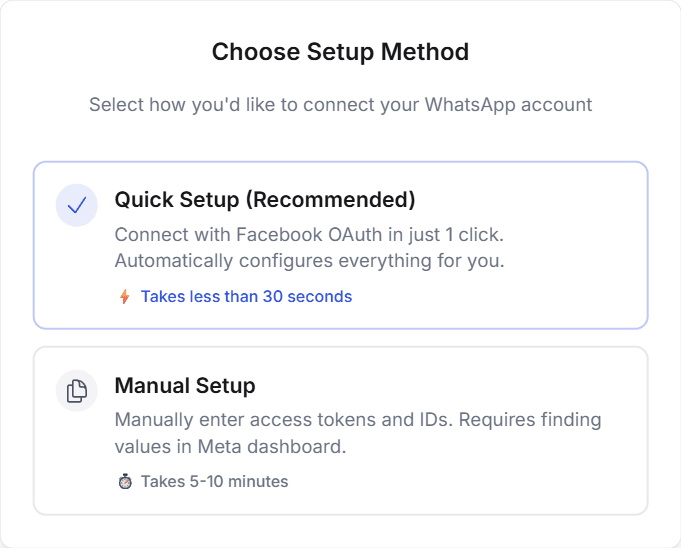
In the Choose Setup Method window, select Quick Setup (Recommended). It takes less than 30 seconds.
Connect with Facebook
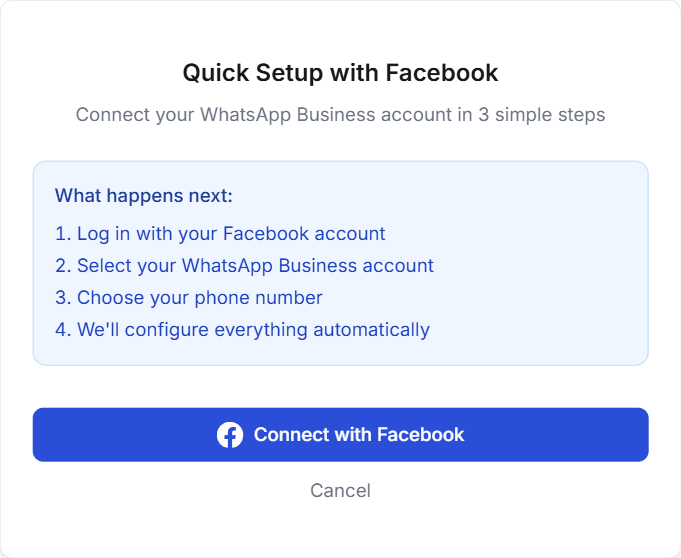
Select Connect with Facebook and log in with the Facebook account that manages your WhatsApp Business account.
Select your business account
Under Select Business Account, choose the WhatsApp Business Account you want to connect, then select Next.
Select your phone number
Under Select Phone Number, choose the WhatsApp phone number to connect to this chatbot, then select Next.
Confirm
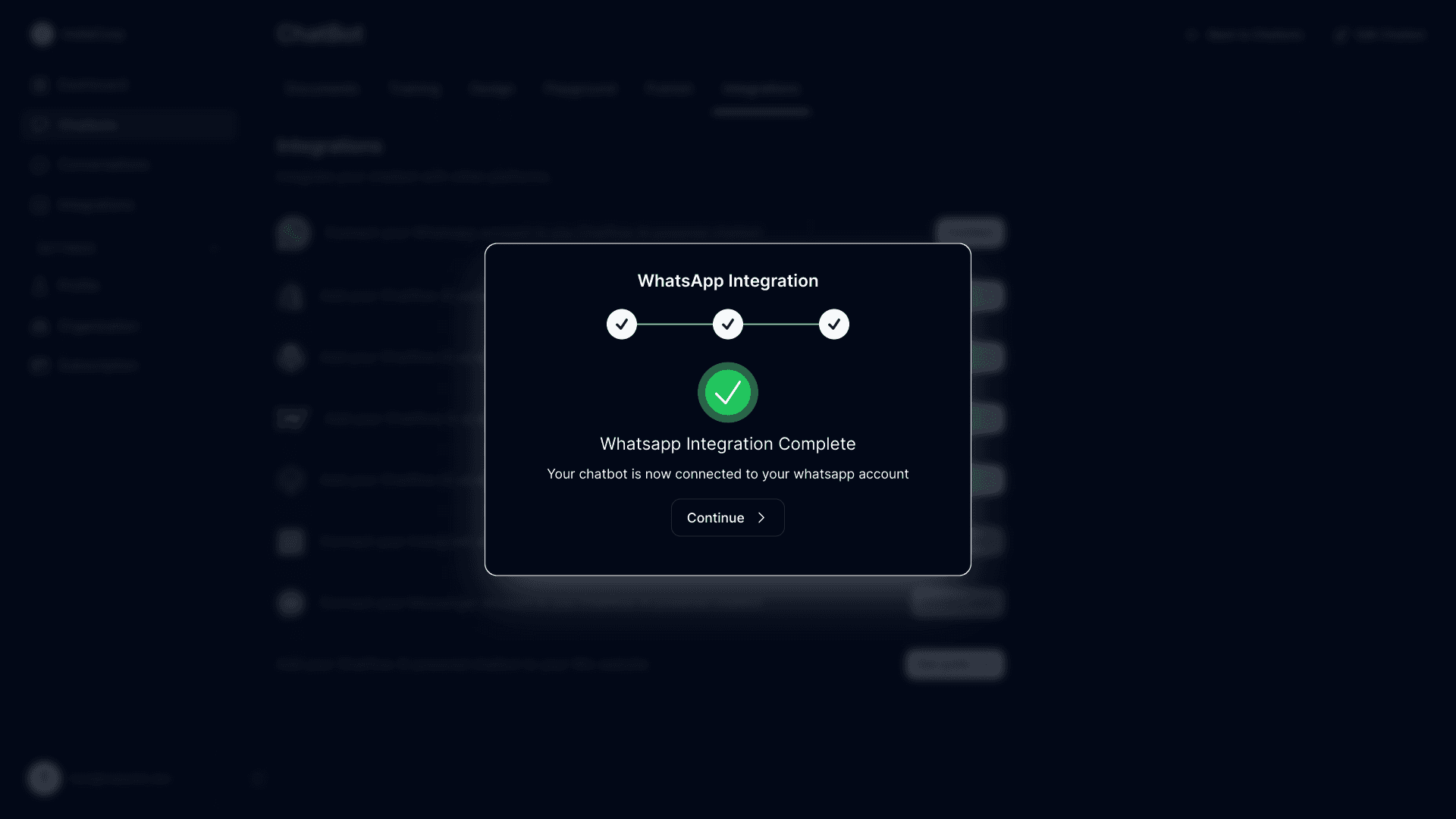
Review your selections under Confirm Integration and select Complete Integration. ChatFlow configures everything automatically and confirms that the integration completed successfully.
Manual Setup
Quick Setup is all most businesses need. If you would rather enter your own access token and IDs, choose Manual Setup in the Choose Setup Method window instead. It takes longer, because you create a Meta developer app, generate a token, and configure the webhook yourself.
Manual step 1: Start in ChatFlow
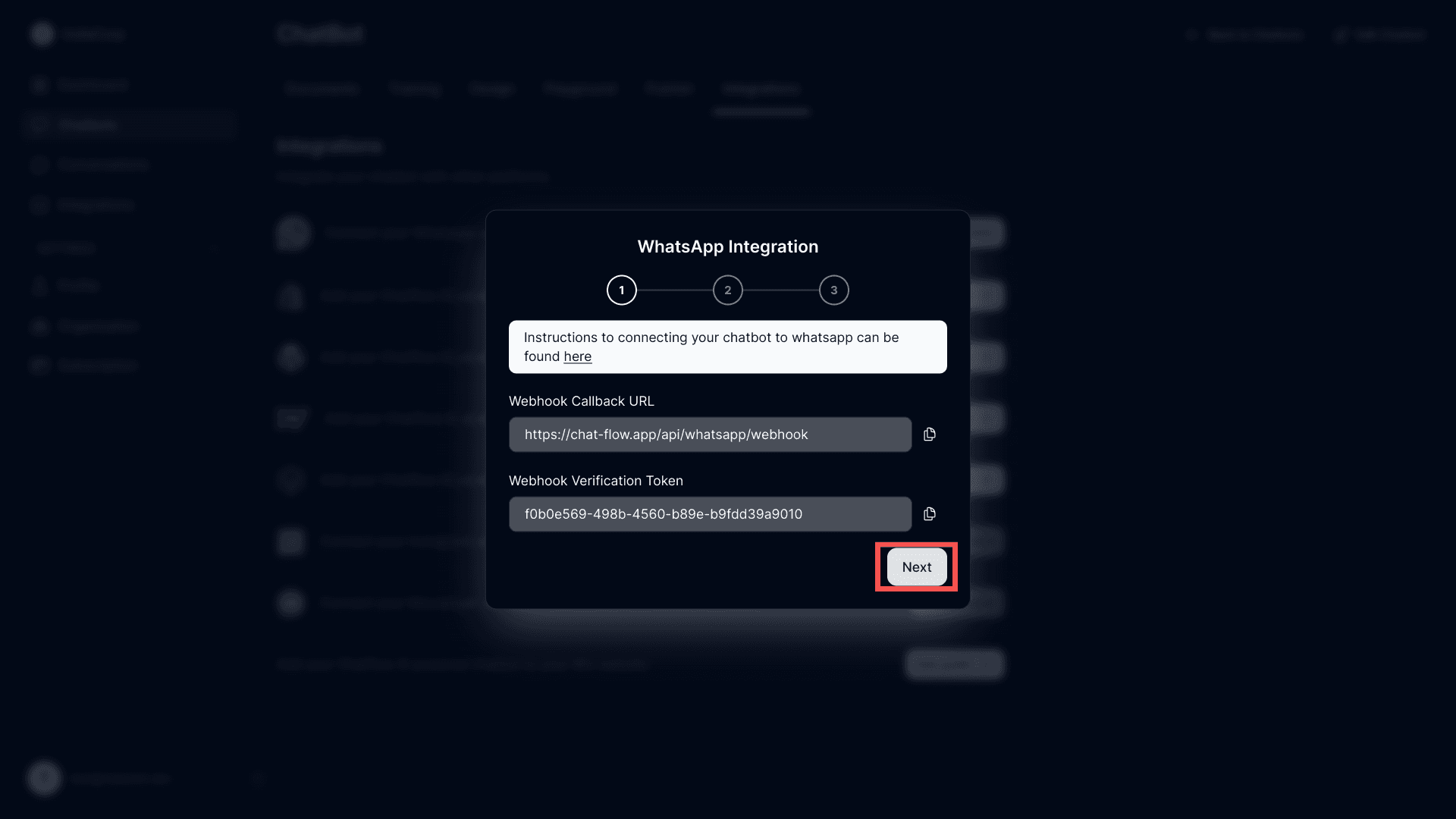
Open your chatbot, go to the Integrations tab, select Connect WhatsApp, and choose Manual Setup. The first screen shows the Webhook Callback URL and Webhook Verification Token you will paste into Meta later. Keep this tab open.
Manual step 2: Create a Meta Business account and app
Create a Meta Business account
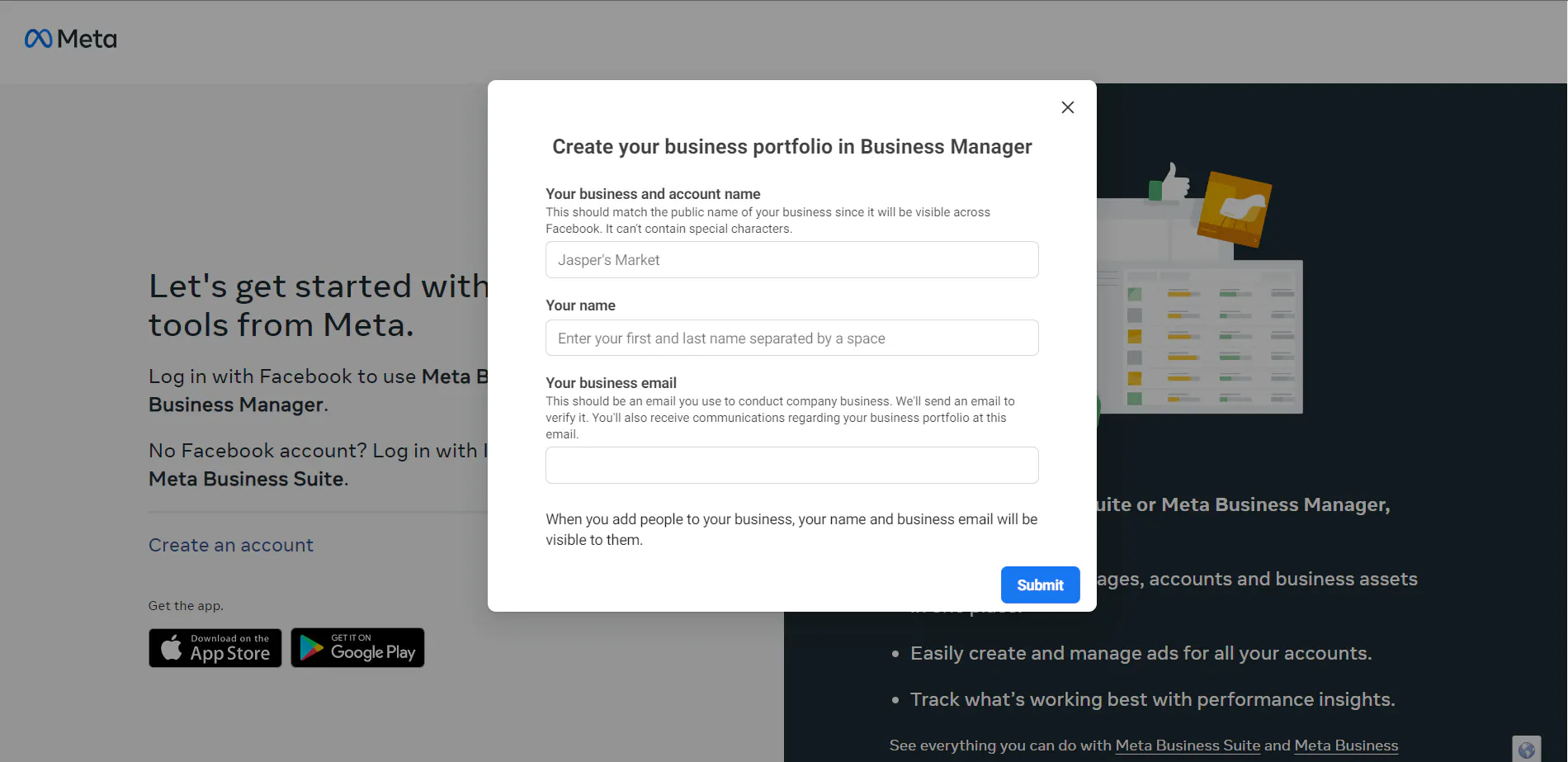
At business.facebook.com, create a business account with your business name, your name, and work email.
Create a developer app
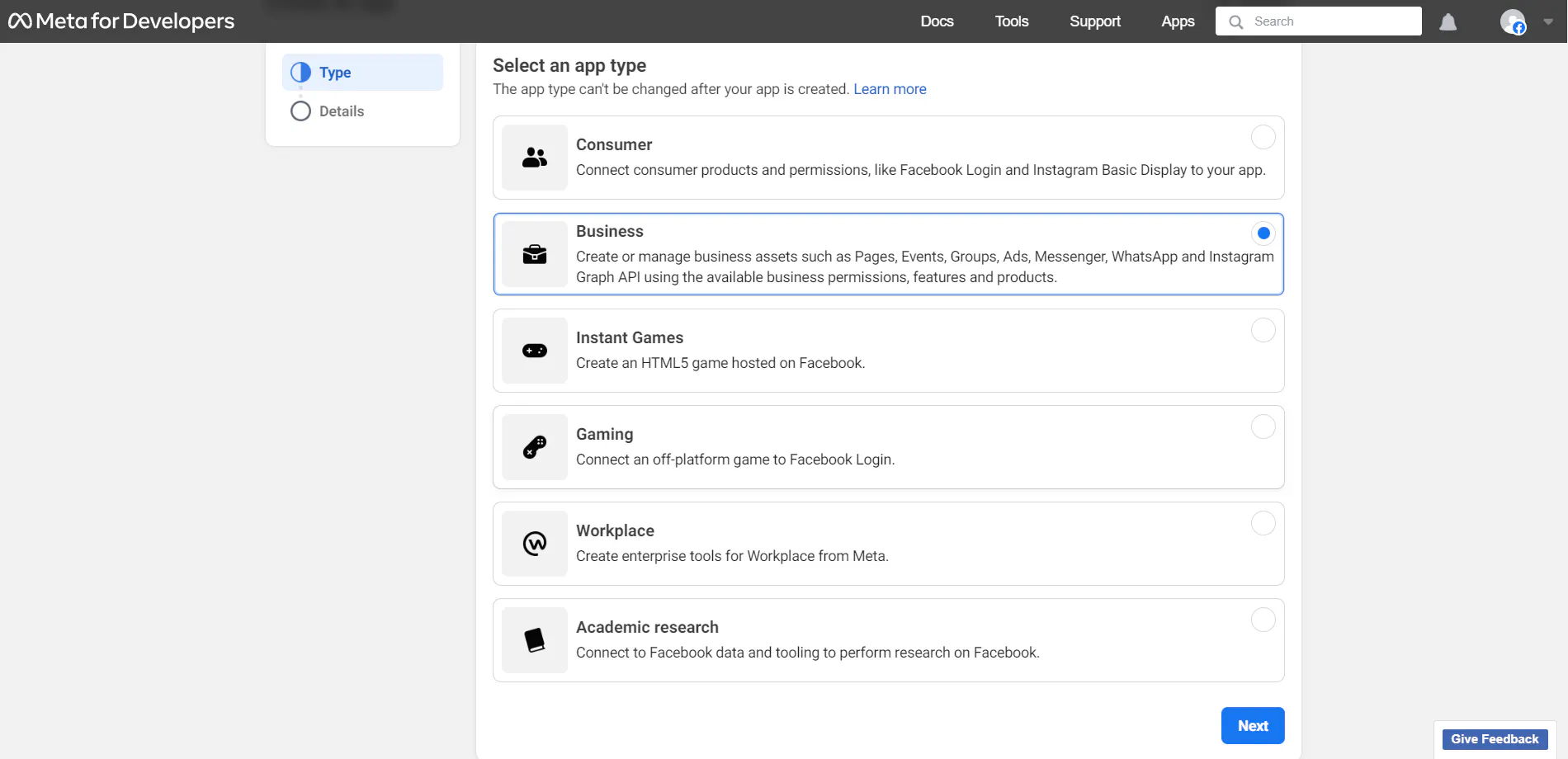
At developers.facebook.com, select My Apps, then Create App. Choose use case Other, then app type Business, enter the app details, and create the app.
Add the WhatsApp product
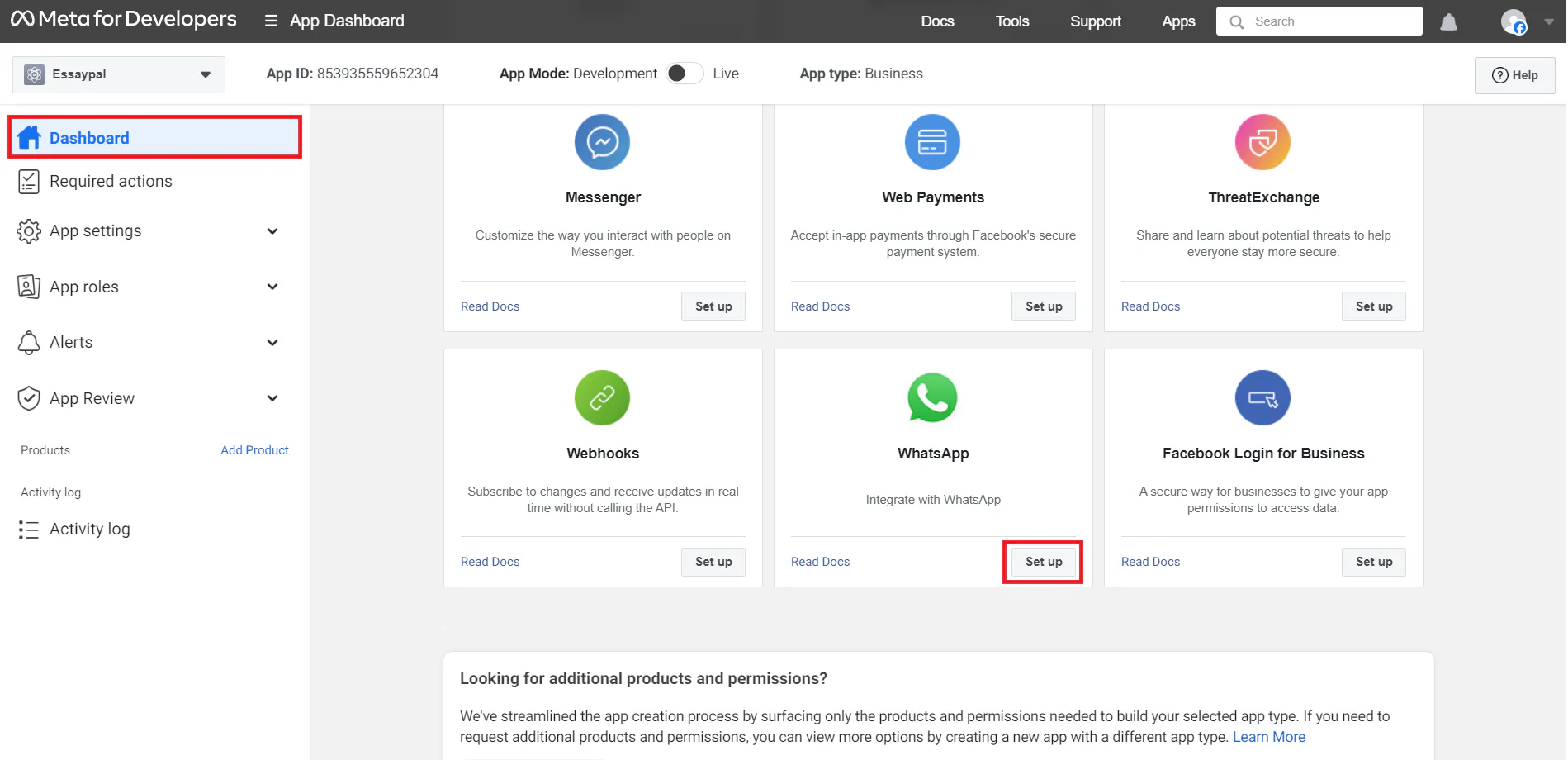
In your app dashboard, find Add products to your app and set up WhatsApp, choosing your Meta Business account.
Set the privacy policy and go live
Go to App settings → Basic, set the Privacy Policy URL to https://chat-flow.app/privacy, save, and switch the app mode to Live.

Manual step 3: Add a phone number
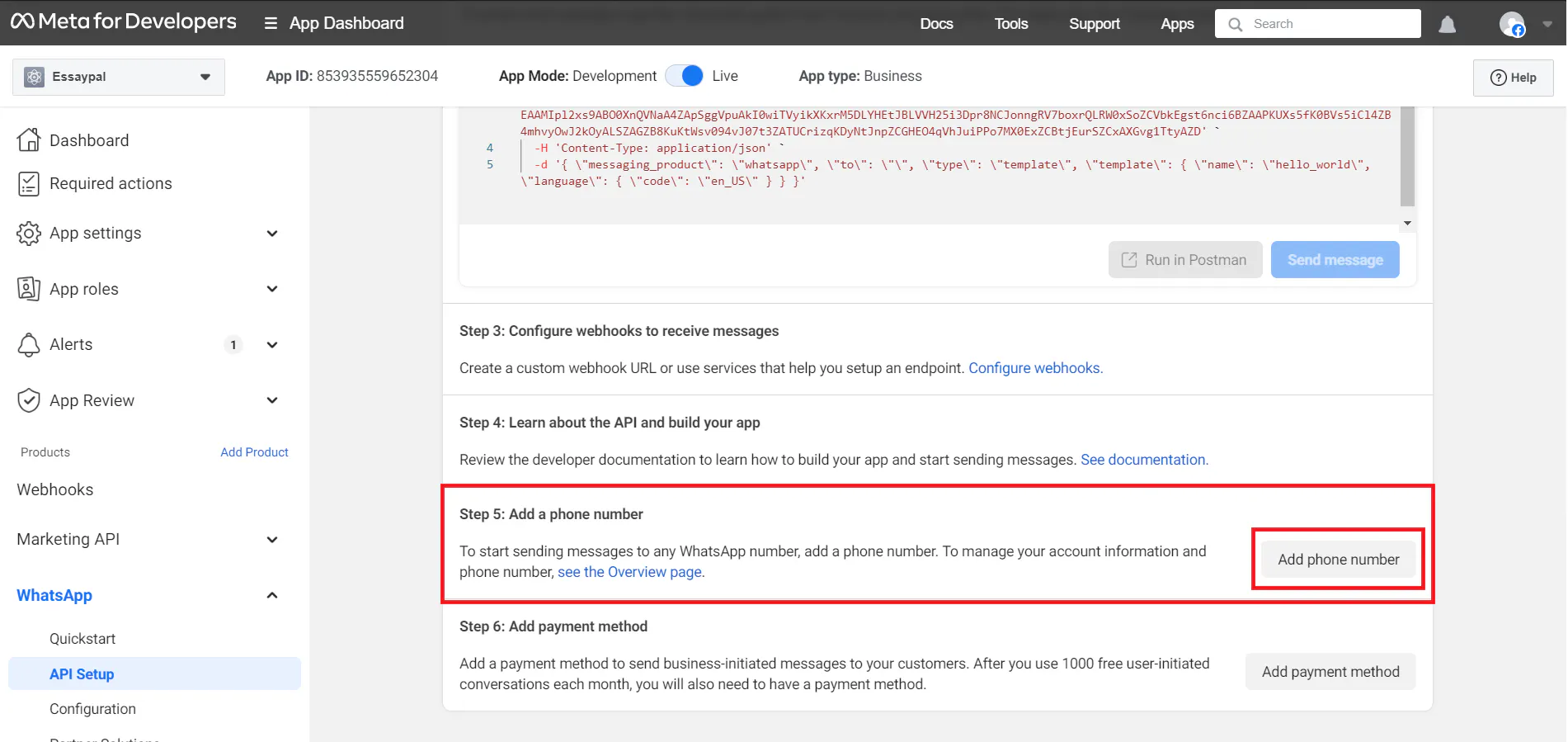
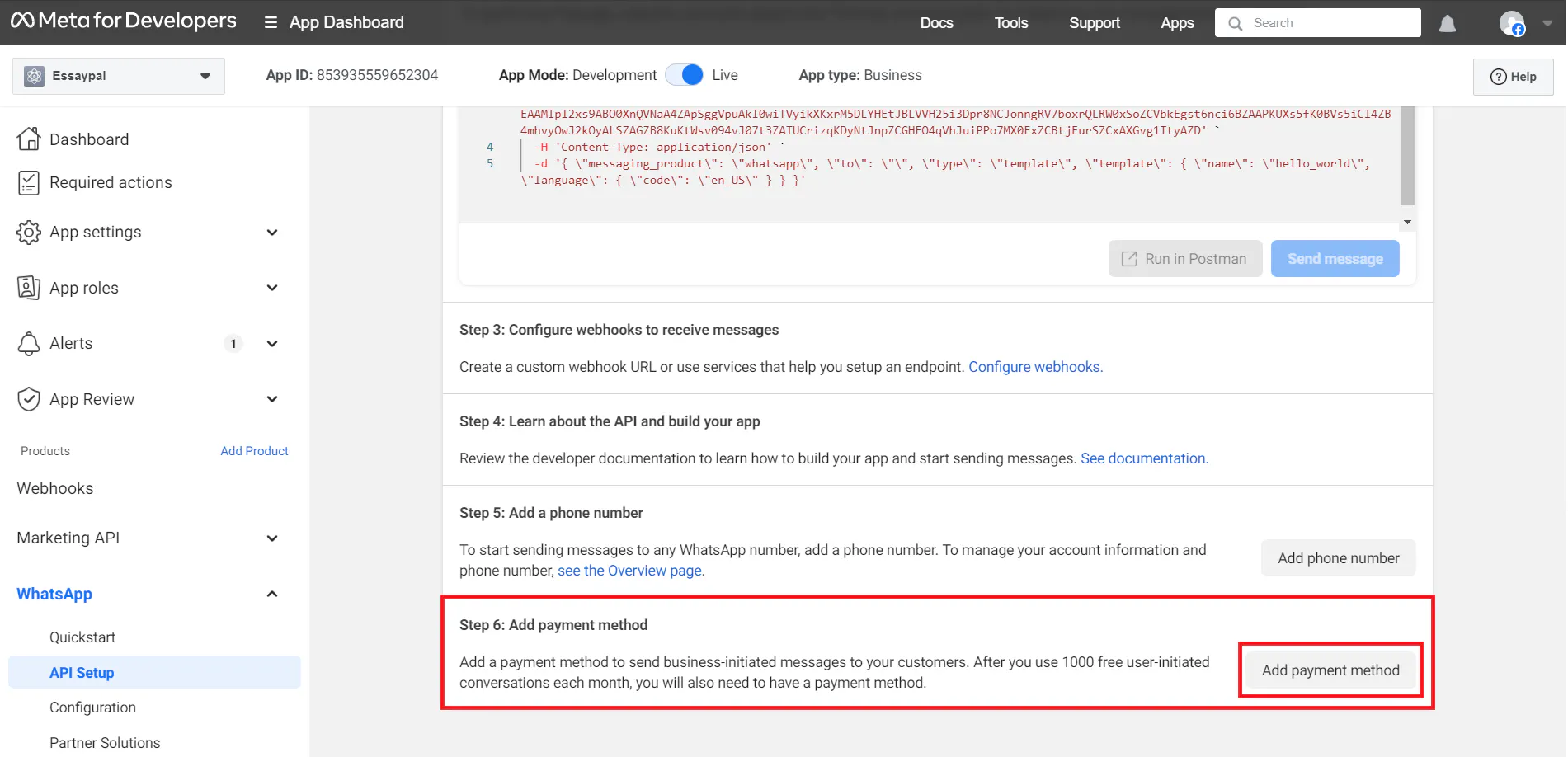
In the WhatsApp API Setup, add your business phone number and verify it with the code Meta sends, then select it in API Setup. WhatsApp also requires a valid payment method on your Meta Business account before it can send messages.
Manual step 4: Generate a permanent access token
Create an Admin system user
In Business Settings → Users → System users, add an Admin system user.
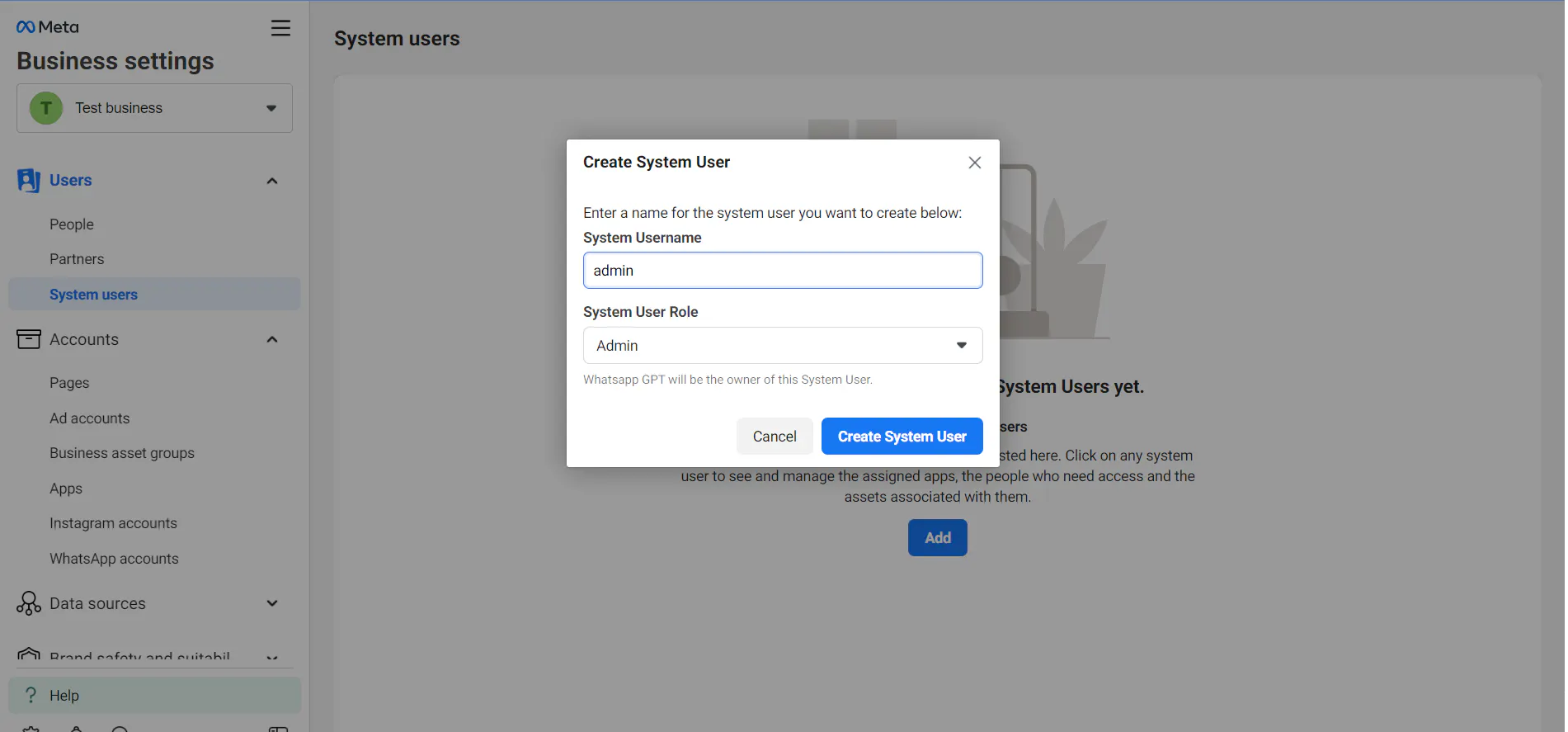
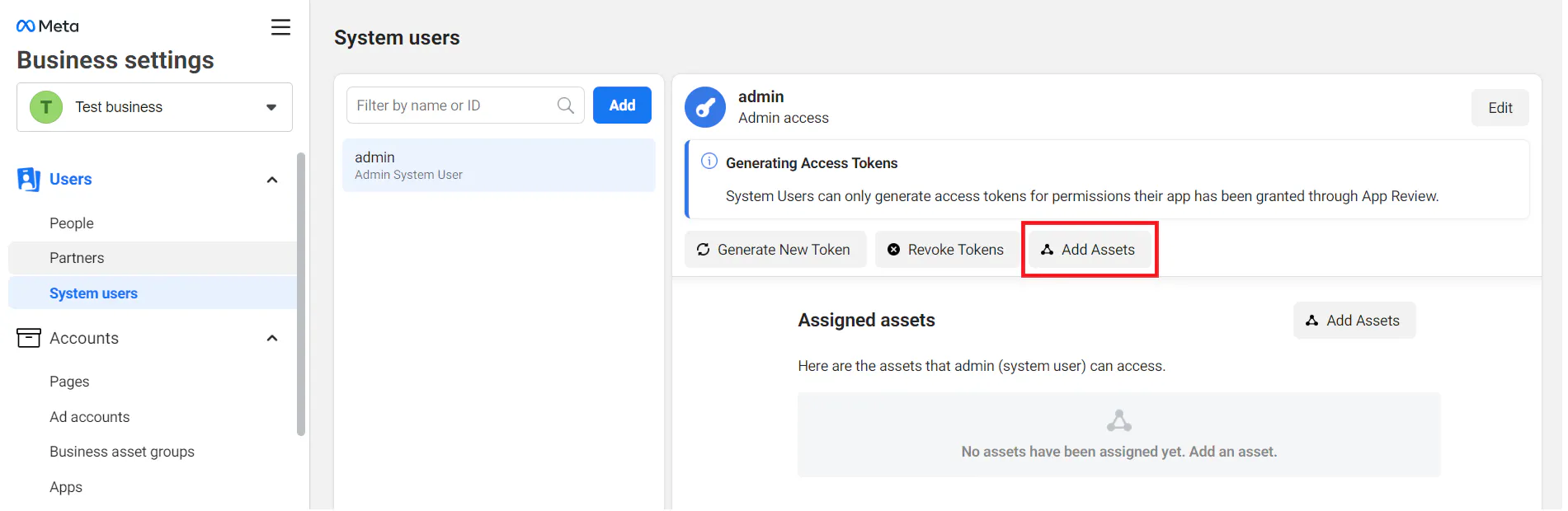
Assign your app
Select Add Assets, choose Apps → your app, and grant full control.
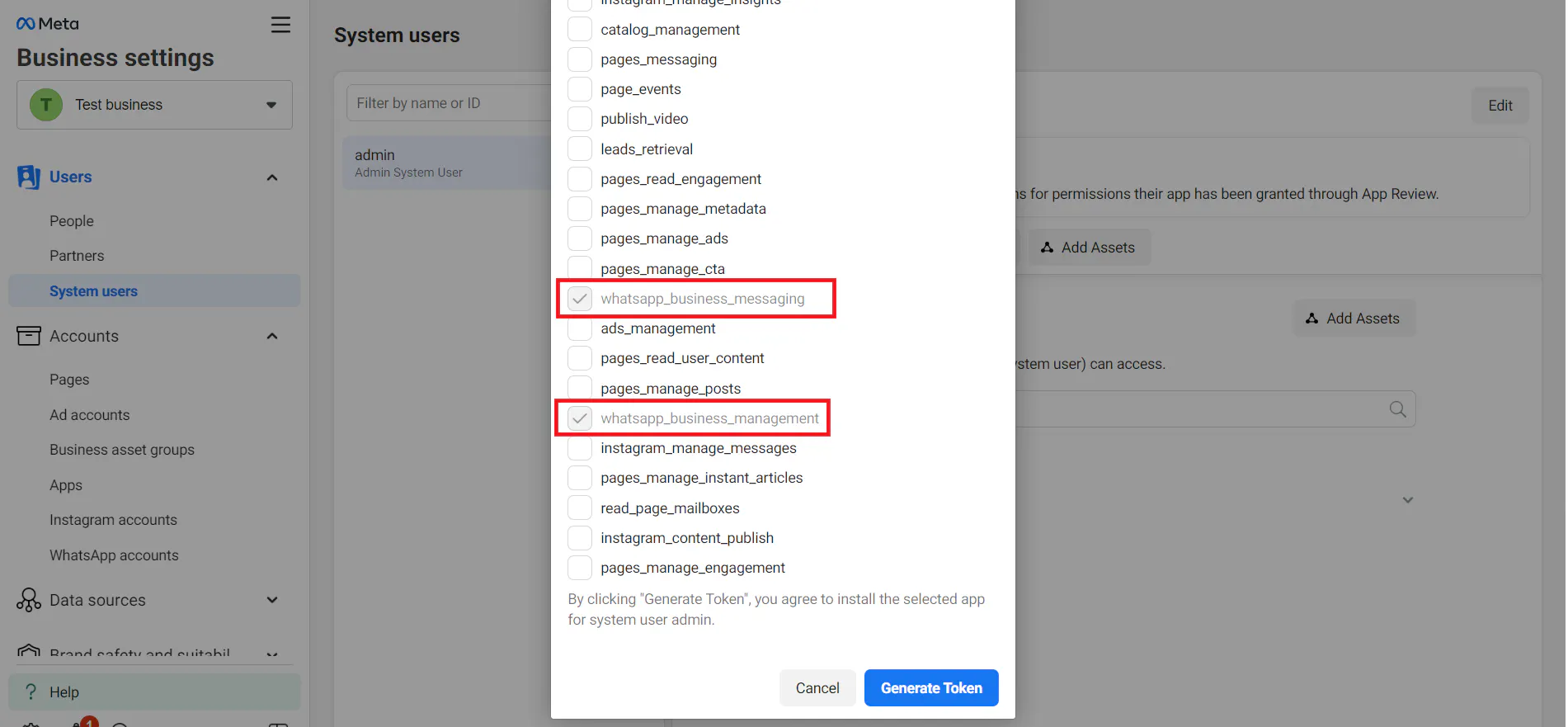
Generate the token
Select Generate New Token, choose your app, set expiration to Never, and select the whatsapp_business_messaging, whatsapp_business_management, and business_management permissions.
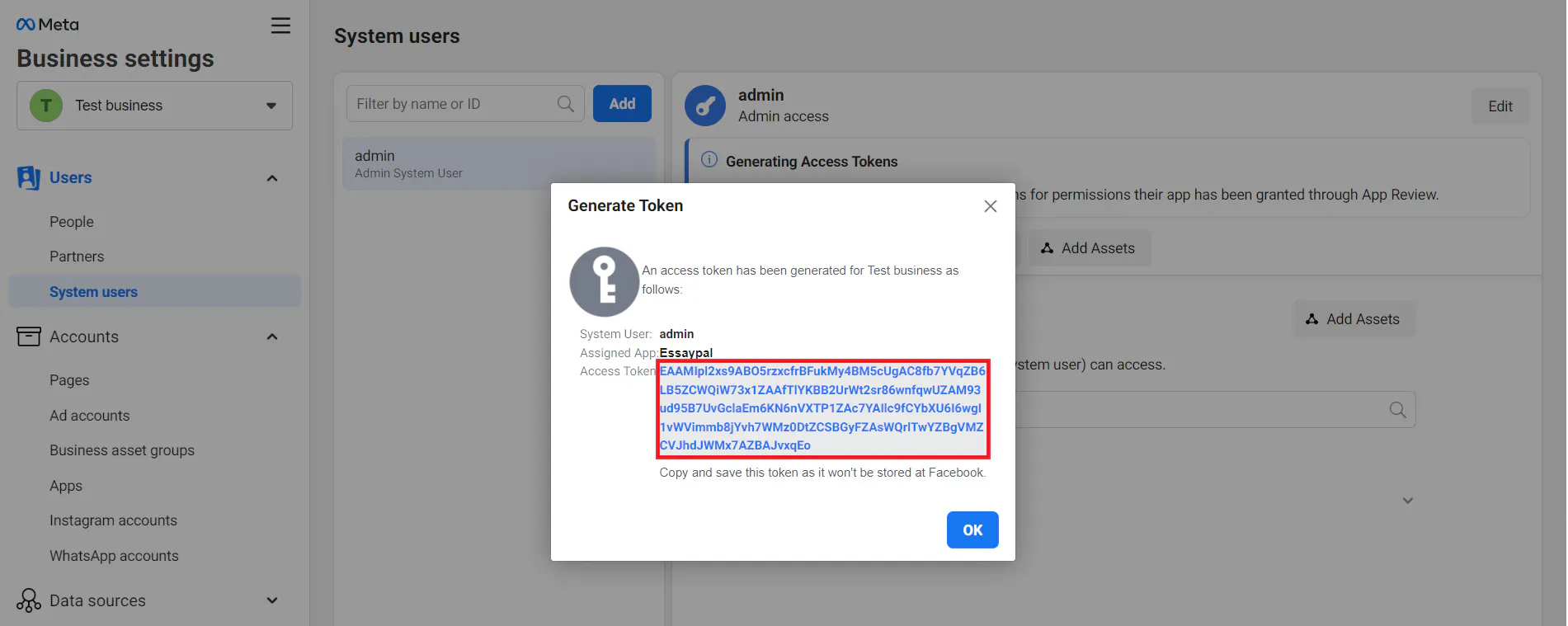
Copy and store it
Copy the token and store it somewhere safe, you will not be able to see it again.
Manual step 5: Configure the webhook
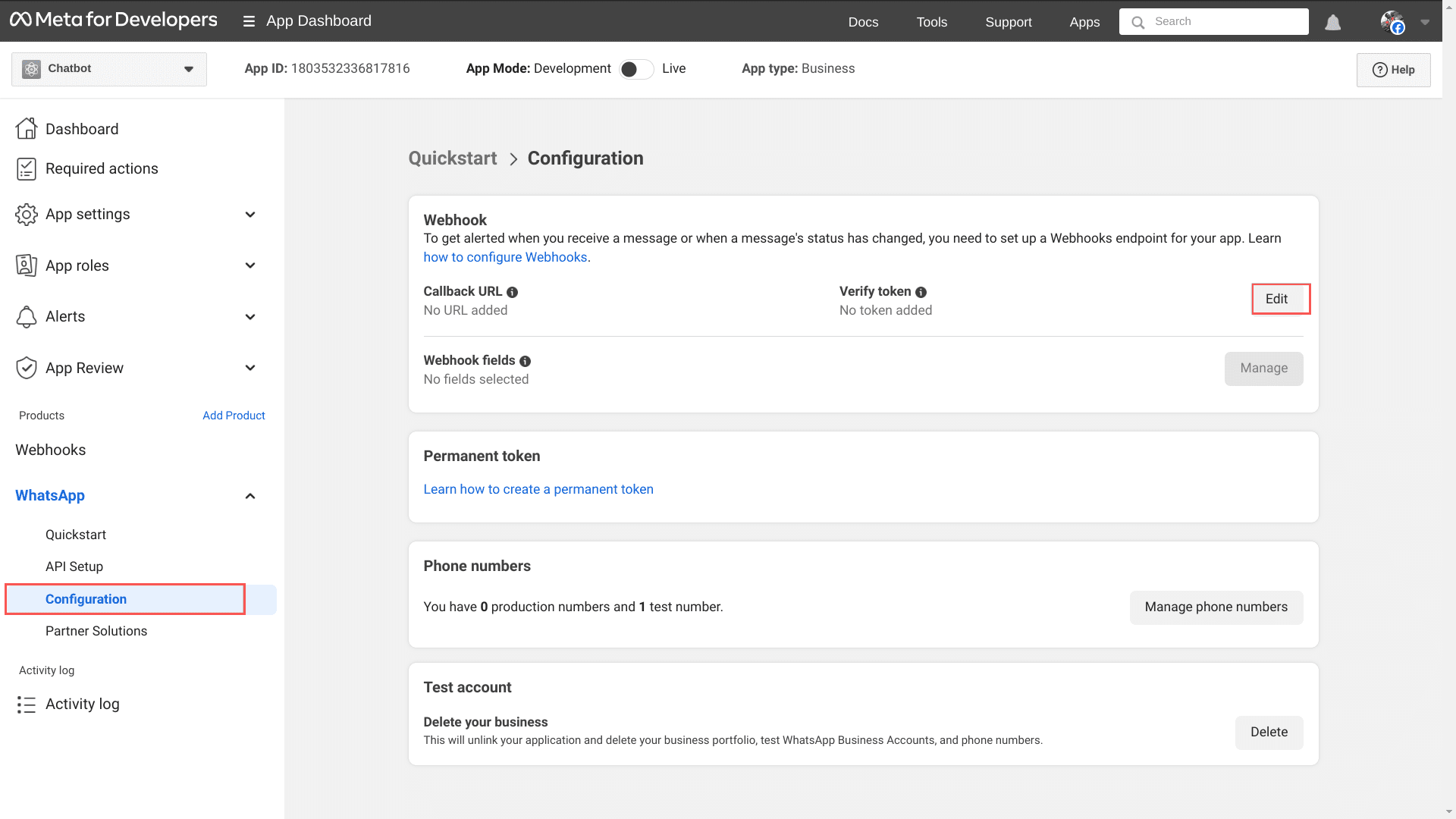
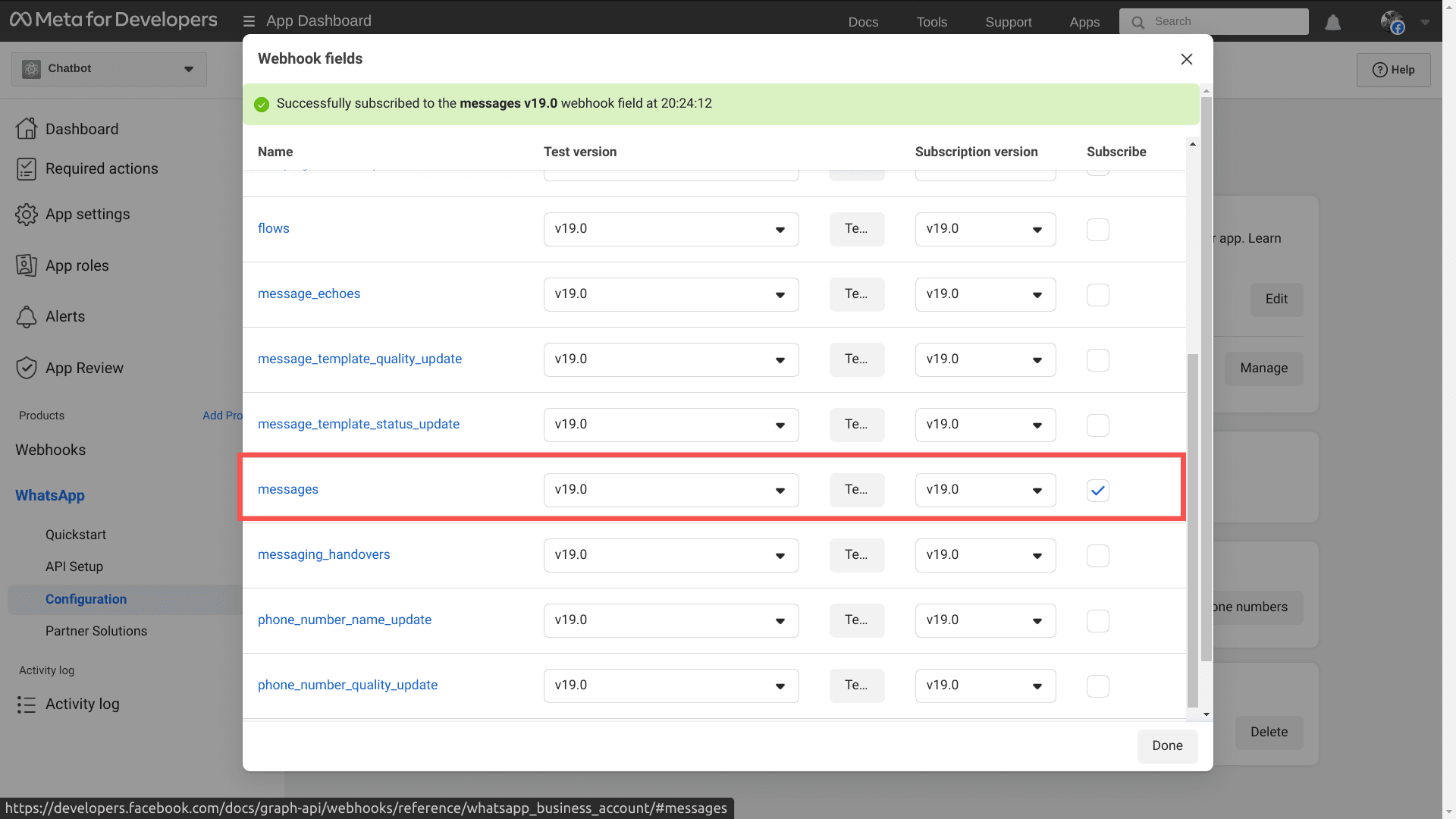
In the WhatsApp Configuration, edit the webhook. Paste the Callback URL and Verification Token from the ChatFlow modal, select Verify and save, then under Webhook Fields subscribe to messages.
Manual step 6: Finish in ChatFlow
Back in ChatFlow, select Next and enter:
- WhatsApp Access Token, the permanent token from manual step 4
- Facebook App Secret, from App settings → Basic
Select Next, then enter the WhatsApp Phone Number, Phone Number ID, and WhatsApp Business ID from WhatsApp API Setup, and select Save.
Verify it's working
- From a different phone, message your connected WhatsApp Business number.
- Confirm the chatbot replies automatically.
- Open Conversations in ChatFlow and confirm the WhatsApp conversation appears.
Manage the integration
On the chatbot's Integrations tab, the WhatsApp card has an Active switch to pause or resume replies. Select Details to edit the connection's settings or remove it.
Troubleshooting
"No Business Accounts Found"
Quick Setup could not find a WhatsApp Business Account on the Facebook login you used. Create one in Meta Business Suite first, or log in with the account that manages it, then connect again.
"No Phone Numbers Found"
The business account you selected has no phone number yet. Add a phone number in Meta Business Suite first, then connect again.
"WhatsApp connection isn't available yet"
This message means the problem is on ChatFlow's side, not with your account. Try again later, or contact support and we will connect it for you.
Messages are not being received
Confirm the WhatsApp card shows as Active and that your chatbot has training content. If you used Manual Setup, also confirm you subscribed to the messages webhook field.
Webhook verification failed (Manual Setup)
The Callback URL and Verification Token must match ChatFlow exactly (the token is case-sensitive), and the Meta app must be in Live mode. Re-copy both from ChatFlow and try again.
The token expired or errors (Manual Setup)
Generate a fresh permanent token with the two WhatsApp permissions, set it to never expire, and update it in the ChatFlow integration.
WhatsApp messaging charges
WhatsApp Business has its own pricing, with a free monthly tier and per-conversation charges beyond it that depend on type and region. Those charges are billed by Meta, not ChatFlow. See WhatsApp's pricing and make sure your messaging follows WhatsApp's Business and Commerce policies.